
Meet L.A.N.E., Spring 2026 Mockingbird Seed Grant Recipient
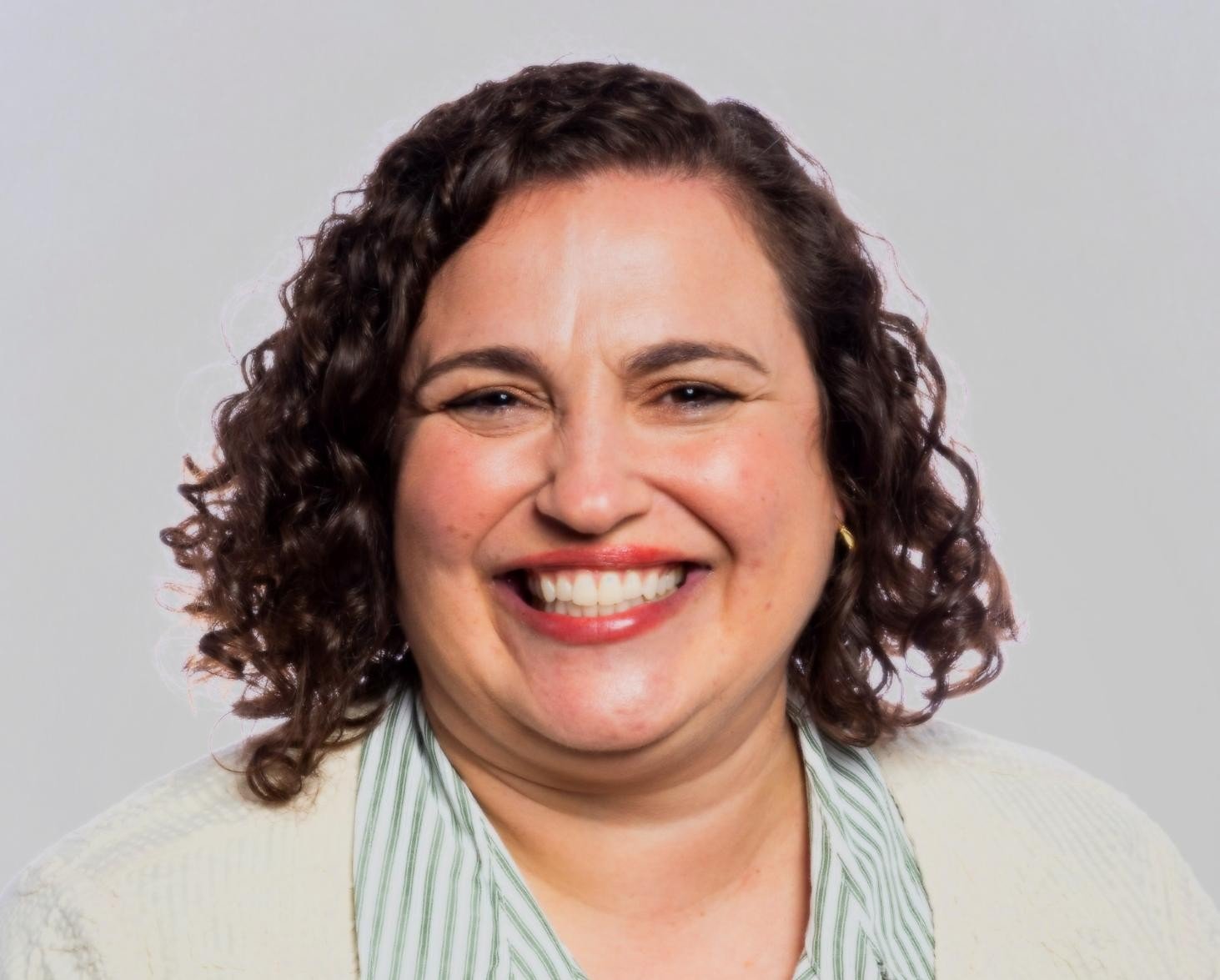
Melissa O. Picciola, Executive Director of L.A.N.E.
We are thrilled to showcaseLegal Aid for Entrepreneurs (L.A.N.E.), the recipients of our Spring 2026 Seed Grant. L.A.N.E. is a Chicago-based nonprofit providing free legal services to low-income entrepreneurs to help them build a strong foundation.
Our team recently sat down with L.A.N.E. 's Executive Director Melissa Picciola, to talk about her experience participating in the Mockingbird Nonprofit Incubator Program. Melissa has over 15 years of experience in legal aid and nonprofit leadership. Through her work with L.A.N.E., Melissa is helping entrepreneurs build strong legal foundation so their businesses and their communities can thrive.
How did L.A.N.E. get started?
I spent fifteen years as a legal services attorney, serving clients in everything from eviction to family law to public benefits. One of the things legal aid is really focused on is crisis intervention, and that work is extremely needed and extremely necessary. But as I collaborated more with the communities we served and got more grassroots and on the ground, I started asking a different question: what would it look like if we didn't just step in after a crisis? What would it look like to really help people build thriving communities? When you stop someone's eviction, you've provided an absolutely essential service, but you haven't made their housing any more affordable or their rent any more achievable going forward. So I got kind of obsessed with what actually makes communities thrive, and how neighborhoods get stronger, safer, and more resilient.
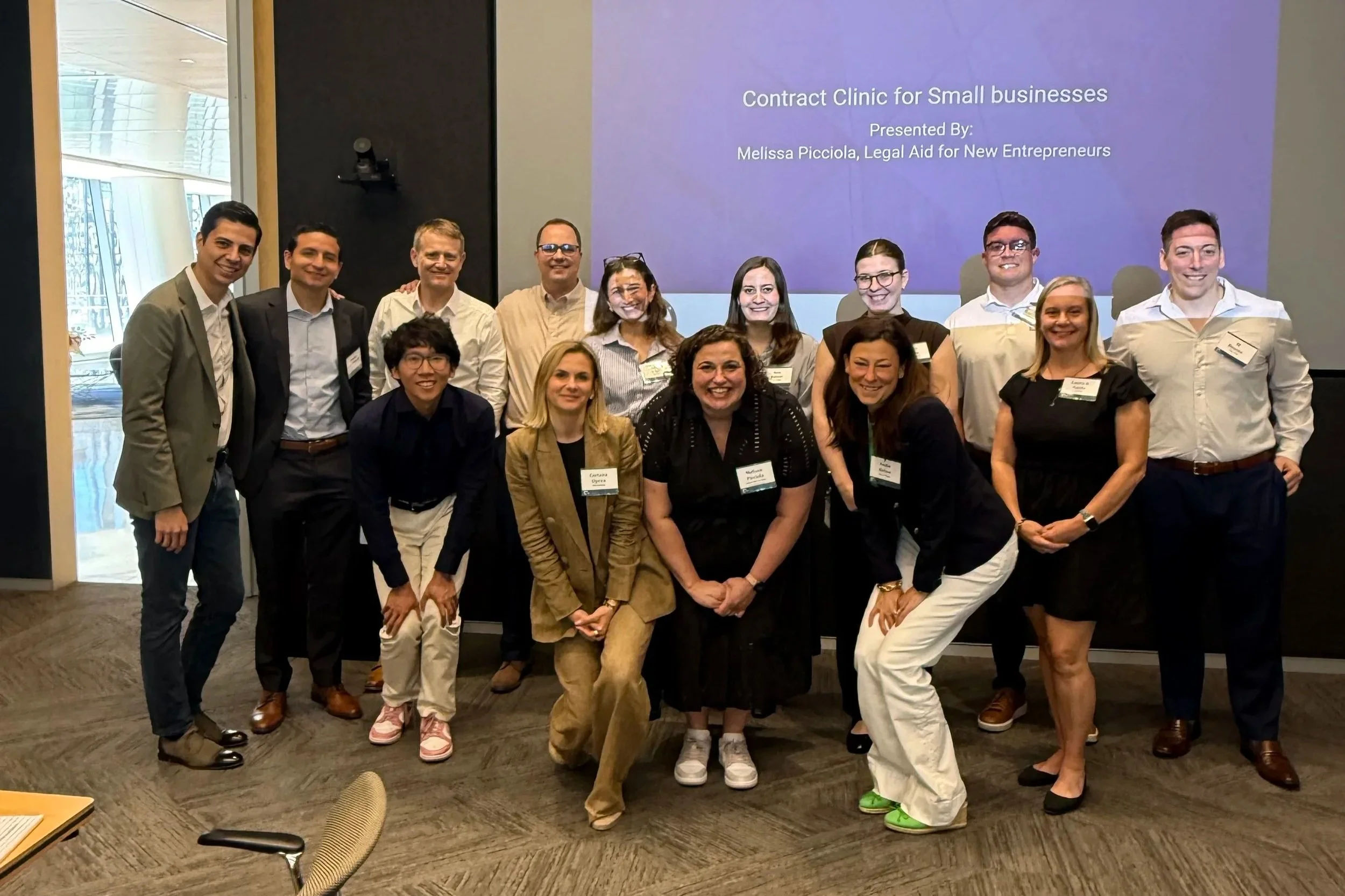
That question led me to small business support. There are so many entrepreneurs who would love to build something in their own communities, employ people from those communities, and create something rooted and special, but legal support just isn't available to them. Many of these entrepreneurs are just starting out and don't have the funds to hire an attorney, particularly a corporate-based attorney, for the transactional legal work every business needs. I couldn't stop thinking about what this could look like, whether it could actually work. I got inspired by a few other programs around the country, particularly one in Charlotte, North Carolina, and started figuring out how we could do something similar in the Chicagoland area.
Why does nonprofit status matter?
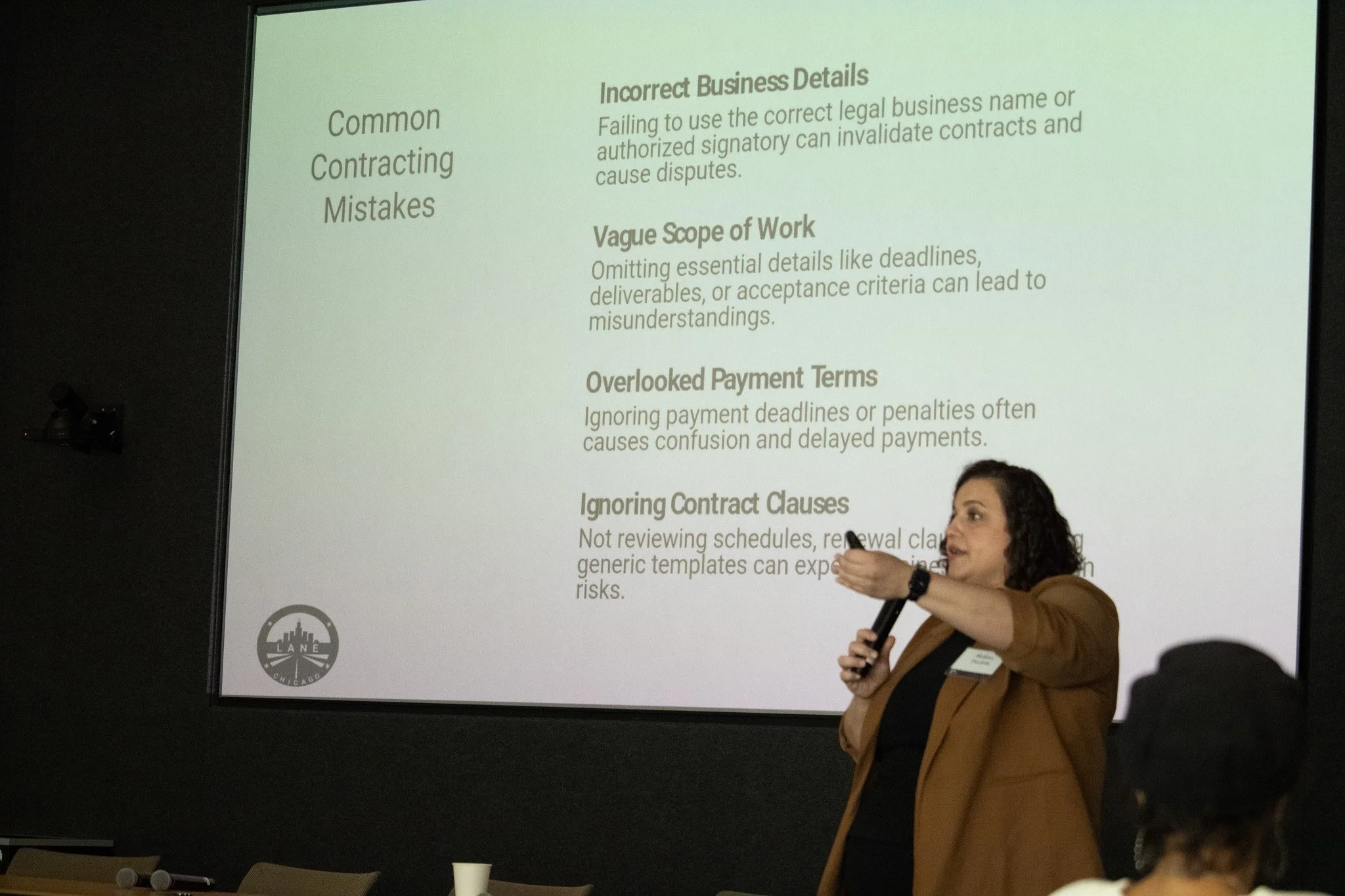
Being a nonprofit is essential to how we're structured. All of our services are free because they're delivered by volunteer attorneys with transactional legal expertise who are willing to give their time to our entrepreneurs at no cost. That nonprofit structure is really key to what we're doing and how we're doing it. It lets us streamline services directly to the people who need them most, without asking them to figure out a sliding scale that can still be a really difficult thing for a client to come up with.
How did you learn about Mockingbird Incubator and the Nonprofit Incubator, and what made you decide to apply?
I've been in nonprofits for about fifteen years, pretty much my whole career, but I've always been at the staff or mid-management level. L.A.N.E. is my first time as an Executive Director, and that came with some trepidation. I was really looking for a program that would help me solidify some of the skills and knowledge I needed to take the organization to the next level.
I found out about the program on social media, and what attracted me to it, beyond the knowledge itself, was that it's a cohort. I was going to be with other nonprofit leaders who were in a similar situation, and given that this was my first time doing this, that came with a lot of imposter syndrome. Am I right for this? Can I do this? Will this work? Being in community with other people facing similar challenges at similar stages was really attractive to me, and it turned out to be one of the most incredible parts of the Incubator.
Even the application process shaped how I thought about all of this. It made me think about how L.A.N.E. fits into the broader nonprofit ecosystem. I like to think L.A.N.E. doesn't stand alone, because we really do rely on other nonprofits to refer people to us and to be in community with us. So the application asked me those really important questions: what do we as a nonprofit offer, and how do we want to be in community with other people?
What was your experience participating in the Mockingbird Nonprofit Incubator Program?
What I was expecting was to learn from experts and to have the opportunity to apply what I was being told to our organization, and those expectations were absolutely met. The classwork is a lot like going to school. And I like school so much that I even went three extra years to get a law degree, right. I like assignments, I like structure, so going to live sessions and then having pre-work and post-work that all built toward a strategic plan was exactly what I was hoping for.
What do you think was the most valuable thing you gained from the Incubator Program?
It's hard to pick just one valuable thing I gained. There's the camaraderie. There's having an actual strategic plan built out. There's hearing from experts. But two things really stand out.
The first is confidence, and some real knocking down of the imposter syndrome I came in with. I don't think it ever fully goes away for me, honestly, it's chronic, but realizing where we started and where we are now helps a lot. So much of what we have to do as executive directors is position ourselves as a place people should believe in. No one wants to give money to a place that won't know what to do with it, and that's a really important skill.
The second was a session with colleagues from Mockingbird Analytics on program evaluation. It really touched a nerve with me. I'm kind of obsessed with it now, and I'll actually be doing a session with other local nonprofits on innovative ways to get participant input into designing and expanding programs. So much of the Incubator is about breaking down silos between community-based nonprofits and the infrastructure that exists around them. From a legal services perspective, the reality is that many of the lawyers delivering our services don't look like the clients they're serving and are in a different socioeconomic class. Building those bridges, and figuring out how to get evaluative feedback that's meaningful without overburdening our communities, is something I'd been thinking about for a while, but it really hit home during the Incubator.
The work of the Incubator also caused us to revise our mission statement. I brought it to the board and said I thought it needed a little revision based on what I'd been working through, and together we landed on a modified version that more accurately represents what we're trying to do and communicates it more clearly. I'm really proud of that.
How has being part of the broader Mockingbird Incubator community supported your work?
Before this, I didn't know the Mockingbird Incubator existed. Knowing there's a place built to support nonprofits, particularly younger nonprofits trying to change the world, means a lot to me. I've already gone to several of the webinars offered since the Incubator ended, and knowing those follow-on programs exist is a huge part of what I consider my journey as an Executive Director, and part of our scaling and growth as an organization. It's definitely a resource I'll keep coming back to.
Resources are what they are, you have to use them the way they're presented to you. There were things in the Incubator that we'd already done in some form, and I found myself thinking, wait, did we actually do that right? And there were other things we weren't ready for yet that I put in my back pocket, knowing that when we're ready, this is what it's going to look like.
Who would you recommend the Mockingbird Incubator Program to?
Nonprofits who are really looking toward the future, regardless of size, who are community oriented, and who are feeling like we're ready to do something else, we're ready to scale, we're ready to move this forward, but who know they need additional infrastructure support to get there.
For us, the outcome of getting a draft strategic plan out of the Incubator is something that probably would have sat on my to-do list a lot longer if I hadn't been, in a good way, forced to do it as a result of the program. Having that structure to break it down, part by part, corresponding with each lesson, took it from my to-do list to actually being done. Our board is voting on it now. It's also a resource we'll keep reiterating on. From a funding perspective, we're so grateful for the seed funding, but having a strategic plan also positions us to approach other funders who may have felt out of reach before, because now we have a vision that's clearly articulated.
What's next for L.A.N.E.?
We just had our one-year anniversary, and this felt like the right time to move from our initial business plan into a real strategic plan. We recently secured office space at a co-working space, which feels like a significant next step, taking us out of my condo and into a real office. Now it's about hitting the pillars of that strategic plan and working on our program evaluation techniques. A year in, we need to give ourselves a report card: how we're delivering services, who we're delivering them to, and whether we're doing what we set out to do.
We got our first government grant this May, which is a huge milestone and opens up a lot of doors. We're still very much in the phase of introducing ourselves and getting into rooms we weren't in before, and I hope we never stop doing that. It's about figuring out smart growth, and where we make sense in the business support ecosystem in Chicago and beyond. I'd also love to not be the sole employee very soon.
If you could tell a future Incubator participant one thing before they start, what would it be?
It works if you work it. The resources are going to be there for you, and the more you're engaging in real time with them, the more you get out of the program. And, you can do it. This is a community that's designed to support you. Utilize the resources and believe in yourself.
If you would like to learn more about L.A.N.E., visit their website here. You can support their work through their Givebutter page.
If you're interested in participating in a future cohort of the Mockingbird Nonprofit Incubator Program, learn more here.